The eX-pat files blog
by Juliet Sullivan
When I first moved to Canada in 2003, I had a series published in The Province newspaper entitled Diary of an Immigrant. The series chronicled my move from Brighton, England to Vancouver. This blog continues the journey. It has been, and continues to be, one crazy ride.

Ozempic and gallbladder disease: is there a link?
February 2026
You have probably* heard a bit of chatter about Ozempic, Wegovy, and Mounjaro — those revered injections that promise the holy grail of weight loss and blood sugar control. There is no doubt that they are helping people to lose weight, steady their insulin levels, and in many cases, transform lives.
*please excuse my sarcasm.
But lately, a few questions relating to these ‘wonder’ drugs have cropped up in the Press and online; one of them being: is there a possibility that they can increase the likelihood of developing gallbladder disease?
And the short answer is: possibly.
Not definitely — and not for everyone — but it’s worth understanding how these drugs can sometimes nudge the gallbladder into mischief.
What these medications actually do
Ozempic, Wegovy, and Mounjaro belong to a class of drugs called GLP-1 receptor agonists. They copy a natural hormone in your body that helps regulate insulin and makes you feel fuller faster, which is why so many people find their appetite dwindles.
But here’s the sneaky downside: those same GLP-1 receptors also live in your gallbladder, and when they’re stimulated, the gallbladder empties more slowly. Bile ends up lounging inside for longer, becoming thicker and more concentrated, and those thicker bile salts and cholesterol can clump together into gallstones.
Why rapid weight loss makes things worse
And just when your gallbladder is already sluggish, along comes rapid weight loss, which adds another layer of pressure. Every time you burn body fat quickly, your liver releases extra cholesterol, some of which ends up in your bile, making it what researchers call “supersaturated.” That’s a perfect recipe for gallstone formation.
What You Can Do About It
If you’ve started one of these medications (or are thinking about it), there is no need to panic. You don’t have to choose between your waistline and your gallbladder. It’s just a matter of being kind to both.
- Go for steady rather than dramatic weight loss; slower changes give your gallbladder time to keep up.
- Try not to skip meals, because long stretches without eating make bile sit still in the gallbladder.
- Keep a little healthy fat in your diet - things like olive oil, nuts, or avocado help your gallbladder contract and clear out bile.
- Tell your doctor if you’ve had gallstones or gallbladder surgery before, so they can keep a closer eye on you.
- Watch for warning signs: pain under the right ribs, nausea, bloating, or pain after fatty foods are all reasons to get checked.
And no, there’s no need for a “just in case” gallbladder removal before you start these meds; routine preventive surgery isn’t recommended. Most people do very well with monitoring, sensible dosing, and a bit of dietary common sense.
A Little Help From The Gallstone Friendly Diet
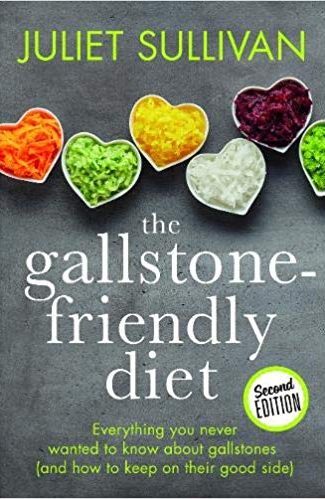
If all of this is making you think, “OK, I need to look after my gallbladder properly now,” that’s exactly why I wrote The Gallstone Friendly Diet: everything you never wanted to know about gallstones (and how to keep on their good side). It’s my down-to-earth guide to eating in a way that keeps your gallbladder as calm as possible, whether you still have it or you’re post-surgery and trying to avoid those digestive dramas.
As I mention often, I am not a doctor. But I have experienced gallstones, and you may or may not know (and I hope you don’t!) they are really no fun. In the book, I talk through the kind of meals that keep bile flowing nicely, how to avoid common triggers without feeling like you’re on punishment food, and how to live your life without constantly worrying about your right side, where the gallbladder lives.
So if you’re on one of these medications, thinking about starting, or just determined not to let gallstones run your life, you might find The Gallstone Friendly Diet a reassuring companion - more like having a chatty, slightly bossy friend giving you advice, rather than a lecture about what you “should” be doing.

How do you mend a broken heart?
October 2023
How do you mend a broken heart? The simple answer is - you don't.
Here I am in my hospital bed, after being diagnosed with a condition called Broken heart syndrome - aka takotsubo syndrome. This is not some mythical made-up condition, it is real. It is increasing. And it is essentially untreatable.
I have of course decided to write a book about my experience, because - well, why not?
The book will be released in October 2024, published by Hammersmith Books.

Good grief?
I wonder where the saying "good grief" comes from.
I am pretty sure there is no such thing as "good" grief. Grief is vile. It is insipid, sneaky and all-consuming. But it is interesting to me that this expression is used as a kind of exclamation.
I asked the Big G what it thought of this and found the background on where the term came from...this is taken from the website www.caregiverrelief.com:
The phrase “Good grief” is believed to have originated in 16th century England. It was commonly used as an expression of shock and surprise during the period. The phrase was mainly employed to express sorrow and distress over a loss or tragedy. Despite being quite common in the English language, it had no literal meaning and was only used as an expression.
By the mid 1800s, the phrase had migrated to the United States and had become even more popular. The phrase gained its modern connotation in the early 1900s from the classic comic strip ""Peanuts,"" created by American cartoonist Charles M. Schultz. The phrase became closely associated with the character of Charlie Brown, who would often exclaim ""Good grief"" when facing difficult situations.
In the 20th century, the phrase has become a verbal tic, often used interchangeably with other exclamations such as “oh my gosh”. Today, it is used to express mild exasperation or frustration and can also be used sarcastically to express disbelief.
A verbal tic! I love it. I have a couple of verbal tics, but I can't say here what they are.

Talented son, fearful mother
Part of being an ex-pat is the constant worry that you have changed the course of your kids' lives somehow, by forcing them to live in a country that is not where they were meant to be.
And when you have a son who is an artist, the worry is not just worry - it's fear. Have I robbed my talented son of the opportunities that would otherwise have been surrounding him?
Son L was born in Brighton, one of the most vibrant, colourful cities in the UK, possibly in Europe. Maybe even the world. Look I am a little biased ok?
His talent has grown, evolved, and blossomed, despite living in a place not especially known for its arts and culture. Yes, Canada has produced my favourite ever TV show - Schitts Creek - and some brilliant comedians / actors / musicians - but most of them had to hoof it to the States to get their breaks.
The music scene in Vancouver is improving, from what I have been told, but still - it's not London. It's not Brighton. People in Canada seem stuck in the past. Radio stations thrive on classic rock, not new music. The bare fact is the talented son would have a lot more chance of getting noticed - and I don't mean by the industry so much as music fans in general - if he had stayed in the UK.
Why does it matter? I suppose it matters because putting yourself out there is exhausting, and let's face it, sometimes soul-destroying. As long as the talented son keeps writing, keeps performing, and keeps trying, he cannot fail.
Seeing it all through his eyes - watching from the sidelines - the ups, the downs, the dips, the victories; I can feel it deep in my soul. And before you cry out, “Pathetic woman, trying to live vicariously through her son!” that is missing the point. I am a writer who is currently writing several books (long story – which is not irony) so I am not suffering with a sense of boredom or under-achievement. But because I am a writer, with a fraction of the talent that the talented son has, I am scared. I know the pain of having a “gift” – ugh this sounds so pompous and self-admiring - but the pain of having a gift is the fear that no-one else will ever know about it. However painful this is, the pain of having a talented son with a much bigger gift than I, is not just painful, it is terrifying.
The Welsh have landed
There is a Welsh family living in my basement
They have been here for two months and are not showing any signs of leaving. Now don’t get me wrong. I love Welsh people. And I love families. But I also love my basement… which, by the way, is not really set up to accommodate a Welsh family (and their dog). It is set up as a bar.
As a Realtor, my job sometimes involves helping new immigrants from the UK. This family was referred to me a few years ago, and at that time, in their planning stages of immigration, they were researching the possibility of buying a property when they moved here. In 2010, I took them out looking at homes, and they were excited about their pending move. Fast forward three years, and their pending move became an actual one. Their plans had changed, though, and now they had decided to rent a house rather than buy. I was still helping them, but they weren’t sure which area they wanted to live in, and so I offered them my basement while they made some decisions. I was a little embarrassed about offering them a two bedroom bar to rent, but it seemed to be a good, temporary compromise, and they were grateful.
Some of us have easy transitions when we immigrate. We don’t realise it at the time, and maybe don’t always appreciate it. By we, of course, I mean me. I have moaned and complained my way through ten years of various trivial “problems”, but compared to the Welsh family, I now realise, I have had it easy. These people have had a run of pure bad luck which would be enough to make anyone question if they are doing the right thing.
They came to BC on a working visa, which means the husband was sponsored by a company and could only work for that particular company whilst living here. After just two weeks, that company told him they had no more work. Suddenly, their whole move here was in question. If the husband could not work, they could not survive. Their search for a more permanent home was put on hold while he searched for another job. The only way to find work was to persuade a company to sponsor him. Not easy. He started applying for jobs all over Canada. Hundreds of applications later, he was thankfully offered another local job. The company agreed to sponsor him, and things started to look up. The family breathed a sigh of relief and found a townhouse to rent. They signed a lease agreement, paid half a month’s rent, plus damage deposit for the dog (a total of $1200), and finally started to feel that they could settle into their new life in Canada.
A week before they were due to move to the townhouse, and two days after paying the deposit, the husband was laid off again. This was enough to test the hardiest new immigrant. How could they take on a tenancy knowing that they may not be able to pay their rent next month? They went to the landlord, told him the situation, and said that regretfully they were unable to take the townhouse after all. The landlord refused to return their rent. I can – maybe – understand that the landlord has his mortgage to pay, and – maybe – was prevented (for two days) from renting to an alternative renter, and that – maybe – he is entitled to keep the half a month’s rent. What I really cannot understand is how this landlord can justifiably keep the $400 damage deposit for the dog. If the dog never moved in, what exactly is the deposit for? Even if the landlord is legally justified in keeping this money (and I am waiting to hear from the Residential Tenancy Branch about that), doesn’t he have a conscience, or some kind of empathy for these people?
So now the Welsh family are $1200 down, with no job, no sign of another job, and nowhere to live – apart from my basement. I am sure one day they will look back on this time and laugh. Actually, I’m not sure about that at all. Immigration is tough, and sometimes, it’s just not funny.